Tales of Eternia Remastered Playable Characters & Combat Guide
Discover the playable characters, party dynamics, and combat mechanics in Tales of Eternia Remastered for Steam and modern platforms.
Published: Tales of Eternia Remastered Wiki Editorial Team
Table of Contents
Overview of the Playable Roster and Core Quartet
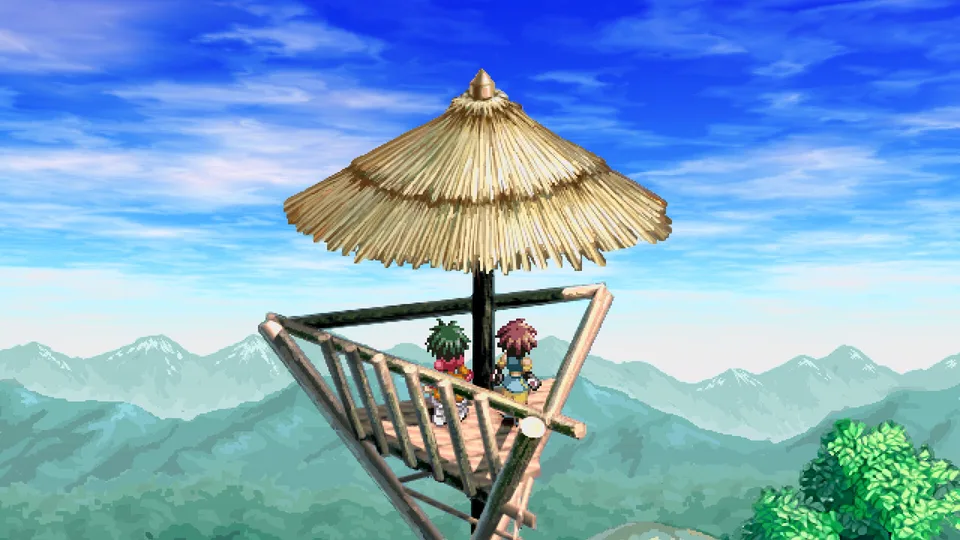
When diving into Tales of Eternia Remastered, understanding the composition of your active party is essential for navigating both standard skirmishes and challenging boss encounters. According to community reports and critical reviews, the game manages its character development much better than many sprawling JRPGs by keeping the spotlight firmly on its central quartet: Reid Hershel, Farah Oersted, Meredy, and Keele Zeibel. Rather than letting party members fade into the background after their introductory arcs, the game consistently gives this core group opportunities to interact, clash, and grow.
Reid Hershel serves as the primary protagonist. While his laid-back and reluctant attitude makes him an entertaining counterbalance to his fiercely altruistic childhood friend Farah, his substantial characterization and motivation take a bit longer to ramp up compared to his companions. Mechanically, Reid acts as a frontline melee fighter specializing in physical offense, particularly slash and stab techniques.
Farah Oersted anchors the emotional core of the group. Her initial introduction as an endlessly helpful friend develops into a complex personal conflict that adds significant weight to her actions. In battle, Farah contrasts directly with Reid by utilizing close-quarters punches and kicks. Experimenting with both melee styles allows players to uncover distinct attack properties and unlock powerful special skills.
Reid Hershel
Reid focuses primarily on physical offense, specializing in slash and stab techniques. His grounded, relaxed demeanor provides an entertaining contrast to the more urgent personalities in the party.
Farah Oersted
Farah utilizes rapid punches and kicks, offering a distinct martial arts style of close-quarters combat. Her deep personal motivations drive much of the early narrative momentum.
Spellcasters and the Kormond Cage System
Moving beyond frontline brawlers, mastering Tales of Eternia Remastered requires understanding how spellcasting and support characters operate. Characters like Keele bring analytical cynicism to the party dialogues, but magic users also demand a different approach to positioning and strategy during high-intensity real-time battles.
Unlike straightforward physical attackers who rely on immediate button inputs for combos, spellcasters manage the flow of combat through the Craymel Cage system. This system houses elemental spirits known as Greater Craymels, which you acquire progressively throughout your journey across the worlds of Inferia and Celestia. Assigning these entities to a character's cage dictates which spells they can access and cast.
As Greater Craymels participate in combat, they develop and gain additional skills through a process called fringing. This mechanic combines different elements, meaning players must experiment with how they distribute spirits across cages. You might choose to concentrate offensive magic on one caster while allocating healing and support capabilities to another.
Acquire Greater Craymels by exploring dungeons and advancing the main story.
Assign spirits to your characters' Craymel Cages via the menu to unlock specific elemental spells.
Engage in battles to let the Greater Craymels grow and trigger fringing combinations for advanced magic.
Balance your party composition to ensure adequate protection for casting animations.
Positioning, Synergy, and Combat Mechanics
The transition to entirely 2D battles in Tales of Eternia Remastered fundamentally changes how you approach encounters compared to modern 3D JRPGs. Because everyone fights along the same linear plane, positioning, attack direction, and party formations become critical factors for survival.
When coordinating attacks, players control one character directly while the rest of the party acts according to set strategies. Guarding against incoming projectiles is vital when you are trying to keep spellcasters alive long enough for them to finish casting. Meanwhile, dealing with aerial enemies requires careful timing and mastery of jumping attacks. While these jumping attacks carry a noticeable learning curve, mastering them prevents flying foes from overwhelming your frontline fighters.
Furthermore, players can learn additional commands from soldiers scattered throughout the world. These commands offer finer control over how AI-controlled party members behave during active skirmishes, allowing you to tailor group tactics to specific boss weaknesses or dungeon layouts.
Tip
Master Aerial Combat: Do not shy away from practicing jumping attacks early on. Many troublesome enemy types are significantly easier to manage once you incorporate vertical mobility into your combos.
Quality-of-Life Additions in the Remaster
The modern release published by Bandai Namco Entertainment introduces several quality-of-life improvements designed to streamline the classic experience without compromising its core challenge. According to community feedback, features like optional destination markers help clarify your next objective without automatically solving environmental puzzles for you. If you prefer a purist navigation experience, these markers can easily be toggled off in the menu.
Other helpful additions include instant battle retry options, quick recovery, adjustable encounter settings, and faster auto-battle functionalities. The ability to disable random encounters makes revisiting familiar areas far less tedious when backtracking for side content or cooking recipes. Additionally, extensive boost options let players modify experience gains and progression speed, though purists may want to use these sparingly to avoid trivializing the intended difficulty curve.
[ ] Toggle destination markers on or off based on your preferred exploration style.
[ ] Utilize the battle retry feature to learn from difficult boss encounters without repeating dungeon floors.
[ ] Check towns across both worlds to collect essential cooking recipes.
[ ] Experiment with higher difficulty settings, such as the "Unknown" difficulty unlocked after clearing the game.
FAQ
What platforms is Tales of Eternia Remastered available on?
The game is available on Steam, PlayStation 4, PlayStation 5, Xbox Series X|S, and Nintendo Switch platforms, as noted on the official site.
Who developed Tales of Eternia Remastered?
The remaster was developed by TOSE Co., Ltd. and published by Bandai Namco Entertainment.
How do combat styles differ between Reid and Farah?
Reid specializes in physical weapon strikes, utilizing slash and stab techniques, whereas Farah relies on unarmed martial arts, focusing on punches and kicks to execute fluid combos.