Tales of Eternia Remastered Performance Details and Changes Guide
Discover the performance details, enhanced visuals, quality-of-life additions, and technical changes in Tales of Eternia Remastered.
Published: Tales of Eternia Remastered Wiki Editorial Team
Table of Contents
Understanding Tales of Eternia Remastered Performance and Modernization
The announcement of Tales of Eternia Remastered has brought considerable excitement to the JRPG community. Originally launched in November 2000 on the PlayStation in Japan and subsequently in North America under the name Tales of Destiny II, the title later received an enhanced port on the PlayStation Portable (PSP) in 2005. For many players, this upcoming release marks a long-awaited return to a classic adventure that has remained largely inaccessible on modern storefronts for decades.
Built on the foundation of the portable version rather than the original 32-bit console release, this refreshed edition aims to bridge the gap for modern hardware. Developer TOSE CO., LTD. has incorporated a sweeping set of technical and gameplay adjustments. According to official announcements and initial community reports, the game is scheduled to launch worldwide on October 16, 2026. Players looking to secure their copy can view the official Bandai Namco Tales of Eternia Remastered site or check out the Steam store page for digital pre-orders and wishlisting options.
Visual Enhancements and Original Graphics Toggle
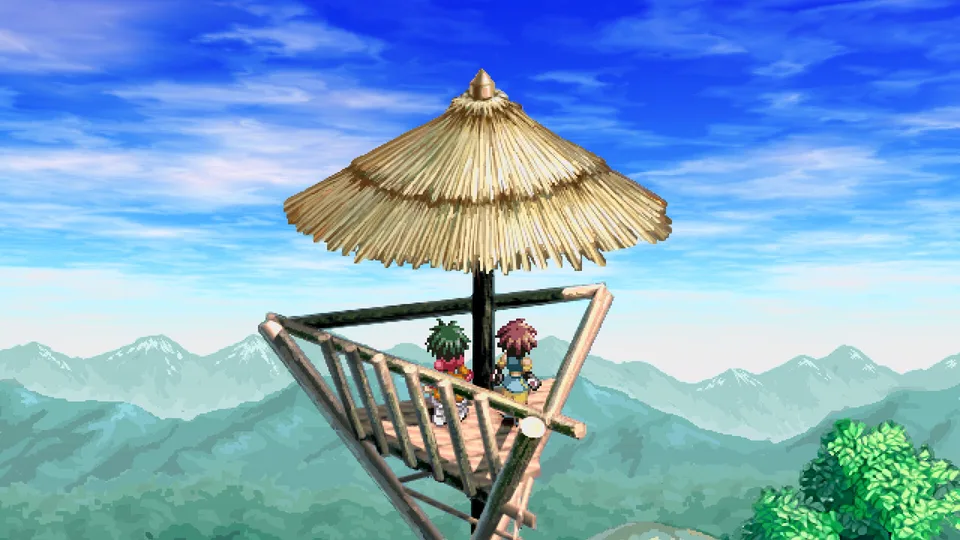
One of the most heavily discussed elements of the remaster involves its visual presentation. When bringing older sprite-based titles to high-resolution modern screens, developers frequently employ various upscaling filters and pixel-smoothing techniques. In the case of this remaster, initial side-by-side comparisons reveal that the background art undergoes a filtering process that blends pixel boundaries to create a smoother aesthetic.
However, community feedback and player experience discussions highlight a common division regarding this style. Some players note that smoothing pixel art can occasionally reduce depth and flatten intricate background shadows. Fortunately, the development team has included a toggle allowing users to switch back and forth between the remastered presentation and the original graphics and sound effects.
Remastered Visuals Mode
Employs smoothed asset rendering and updated visual fidelity, designed for modern displays but altering the raw pixel appearance of background environments.
Original Visuals Mode
Preserves the classic pixel art style and authentic audio assets, maintaining the visual consistency between character sprites and background details.
Utilizing the original graphics option ensures that the character sprites and environments maintain a unified aesthetic, preventing the potential clash between crisp character art and softened backgrounds.
Quality-of-Life Features and Progression Improvements
To accommodate modern gaming standards, Tales of Eternia Remastered introduces an extensive suite of quality-of-life adjustments. These additions are tailored to streamline progression, reduce unnecessary friction, and help both newcomers and veteran fans navigate the sprawling journey of Reid, Farah, and Meredy across the intertwined worlds of Eternia and Celestia.
Activate Auto-Save and Quick Recovery: Make use of the new auto-save functionality and quick party recovery features to minimize progress loss during exploration and dungeons.
Utilize Navigation Markers: Follow quest destination markers, distance-to-objective displays, and special field icons that highlight limited-time events, important items, and newly learned skills marked with distinctive blue or green exclamation points.
Manage Boost Features: Adjust progression pacing by utilizing boost settings that modify encounter rates and experience gains according to your preferred playstyle.
Customize Controls and Accessibility: Set up full key or button remapping, adjust master volume sliders, and enable subtitles for skits, movies, battle victory quotes, and Mystic Arts alongside color-blind accessibility improvements.
Additional gameplay refinements include the ability to retry battles immediately after a defeat—even during standard encounters—as well as options to pause and skip events, skits, and cinematic cutscenes. The game also introduces a skit replay function, auto-advance dialogue options, faster movement speeds on the field, and a speed-up toggle for auto-battles.
Audio, Localization, and Voice Acting Updates
The audio landscape of the remaster introduces notable changes, particularly regarding localization and voice performance. Because the European release from the 2000s featured Japanese audio with English translated text, this new edition benefits from a complete script re-localization. Furthermore, the entire cast has been re-dubbed to fit modern standards, reflecting the passage of 25 years since the original release.
While some community feedback notes that certain line deliveries retain a charming, nostalgic '90s theatrical flair, players retain full flexibility regarding audio preferences. Just like modern entries in the franchise, users can toggle back and forth between the newly recorded English voices and the original Japanese audio track at any point during gameplay. Additionally, subtitles have been expanded to cover skits, movies, battle quotes, and Mystic Arts, ensuring comprehensive readability during intense real-time combat scenarios.
Combat Mechanics, Difficulty Settings, and Endgame Content
Combat in Tales of Eternia Remastered relies on the dynamic 2D Aggressive Linear Motion Battle System (A-LMBS). While early-game encounters can feel straightforward or constrained due to a limited initial moveset, the combat depth opens up significantly as players acquire more skills, arts, and master the combo command system, eventually delivering a pacing reminiscent of a fighting game.
New Game Plus: Carries over progress staples, though community reports indicate that the grade shop may not be unlocked immediately at the start of the game.
Difficulty Options: Features the demanding Extreme difficulty right from your first playthrough, with the even tougher Unknown difficulty unlocking after beating the game.
Endgame Dungeons: Unlocks the high-difficulty EX dungeon, Nereid's Labyrinth, earlier in the progression path for players seeking rigorous solo or party combat trials.
Extras: Includes custom battle BGM settings and updated mini-game retry options alongside a refreshed Tales quiz containing series-wide trivia.
Frequently Asked Questions
Is Tales of Eternia Remastered a multiplayer game?
Based on official platform listings, the game is currently listed as a single-player experience. Because this remaster is modeled after the PSP handheld version rather than the original PlayStation console release, local cooperative party control is absent from the current feature set.
Can I switch between the remastered soundtrack and original audio?
Yes. Players can toggle between the remastered audio arrangements and the original sound effects and music directly through the game's audio options menu.
When does Tales of Eternia Remastered release?
The title is scheduled for a worldwide launch on October 16, 2026, across PlayStation 4, PlayStation 5, Xbox Series X|S, Steam, Nintendo Switch, and Nintendo Switch 2.